
In 2025, the freelancer economy is undergoing a dramatic transformation fueled by technological advancements, the integration of AI technologies, the widespread adoption of remote work models, and the rise of digital nomadism. The global freelance market size is expected to reach $646.77 billion in 2025 and soar to $2.14 trillion by 2030. This growth creates unique opportunities for freelancers with tech-oriented skills, AI adaptability, and specialized expertise.
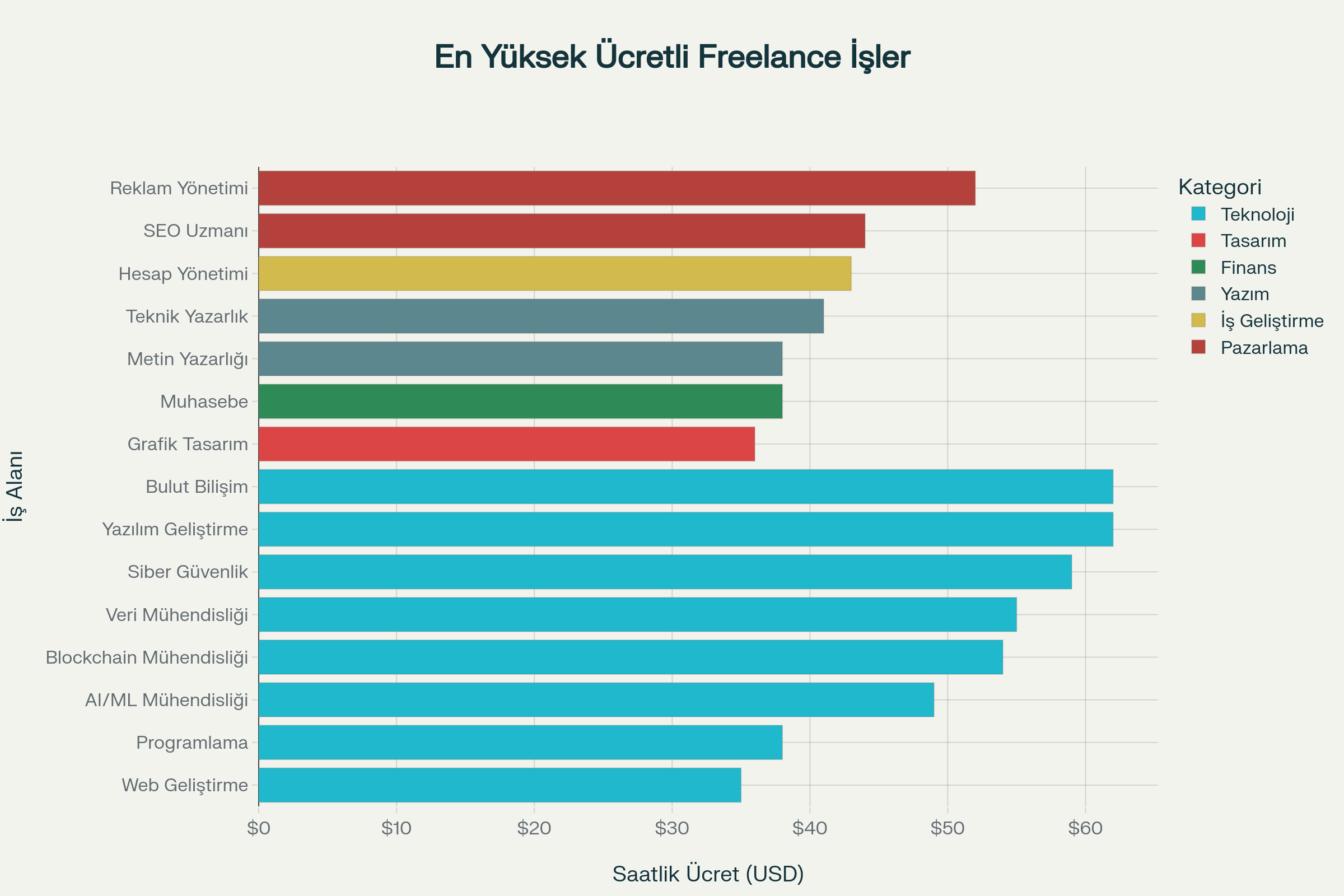
Highest-Paying Freelancer Jobs – Hourly Rates (USD)
Leading Roles in the Technology Sector
In 2025, the highest-paying freelance jobs are concentrated in the technology sector. Software development and cloud computing lead the way with $62/hour, followed by cybersecurity specialists earning $59/hour. Emerging fields such as blockchain engineering, Web3 technologies, and AI/ML engineering also offer substantial earning potential.
Demand for AI and machine learning has surged by 600%, while prompt engineering skills have grown by 450%, driven by businesses’ need to integrate AI tools and the shortage of qualified professionals.
Marketing and Content Creation
Digital marketing and SEO expertise continue to be strong income sources, with average hourly rates between $44–$52. Freelancers specializing in content marketing, social media management, and email marketing can generate recurring income streams, especially through subscription-based models.
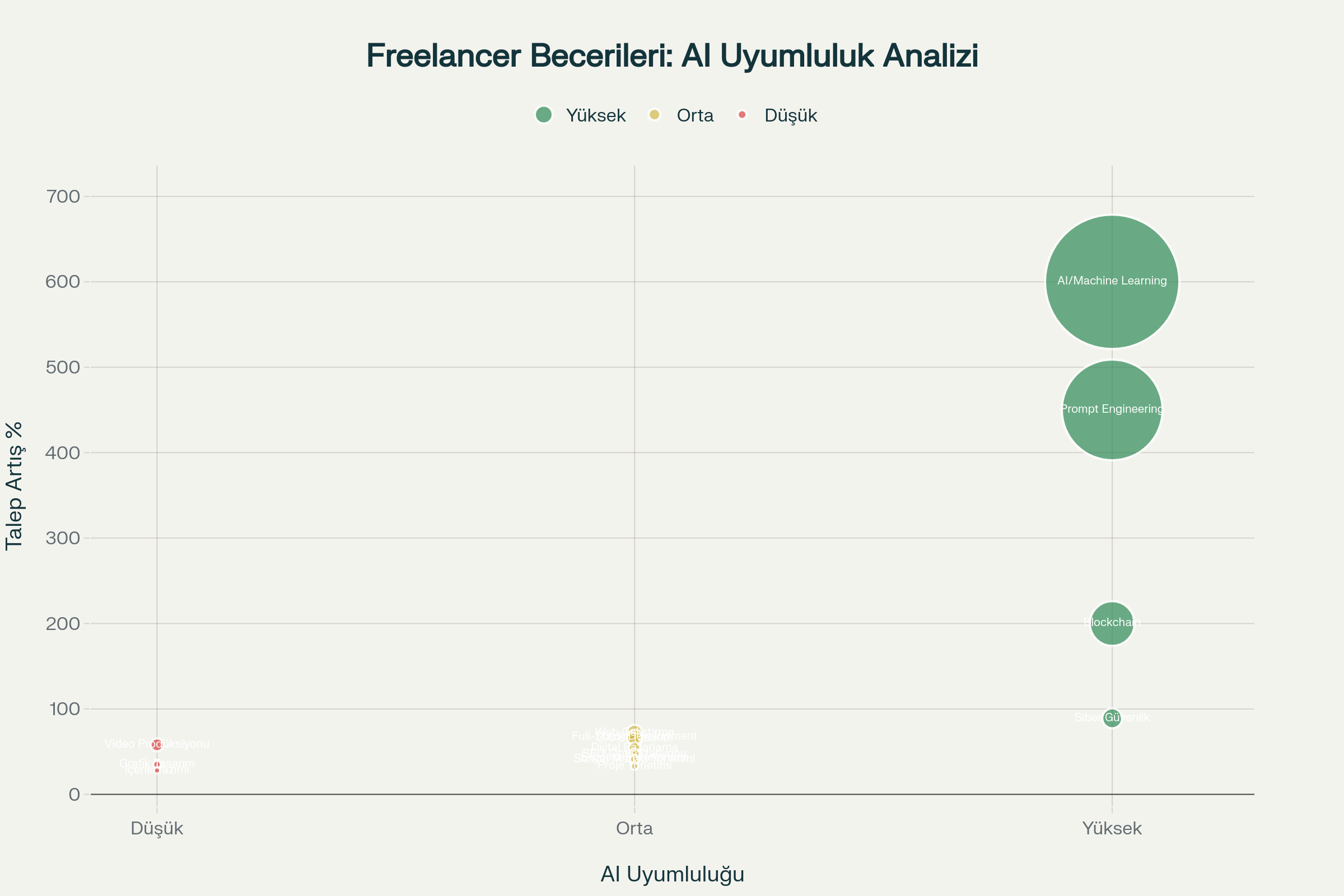
Freelancer Skills – AI Compatibility and Rising Demand
Creative and Design Services
Graphic design and web design remain popular fields, but UX/UI design specialists command higher rates due to increasing digitalization. Video production and multimedia content creation are also in high demand, particularly with the growth of social media platforms.
Market Growth and Global Trends
The freelance platform market is projected to grow from $6.37 billion in 2025 to $14.39 billion by 2030, reflecting an average annual growth rate of 17.7%. Meanwhile, the broader gig economy is expected to expand from $646.77 billion to $2.14 trillion in the same period.
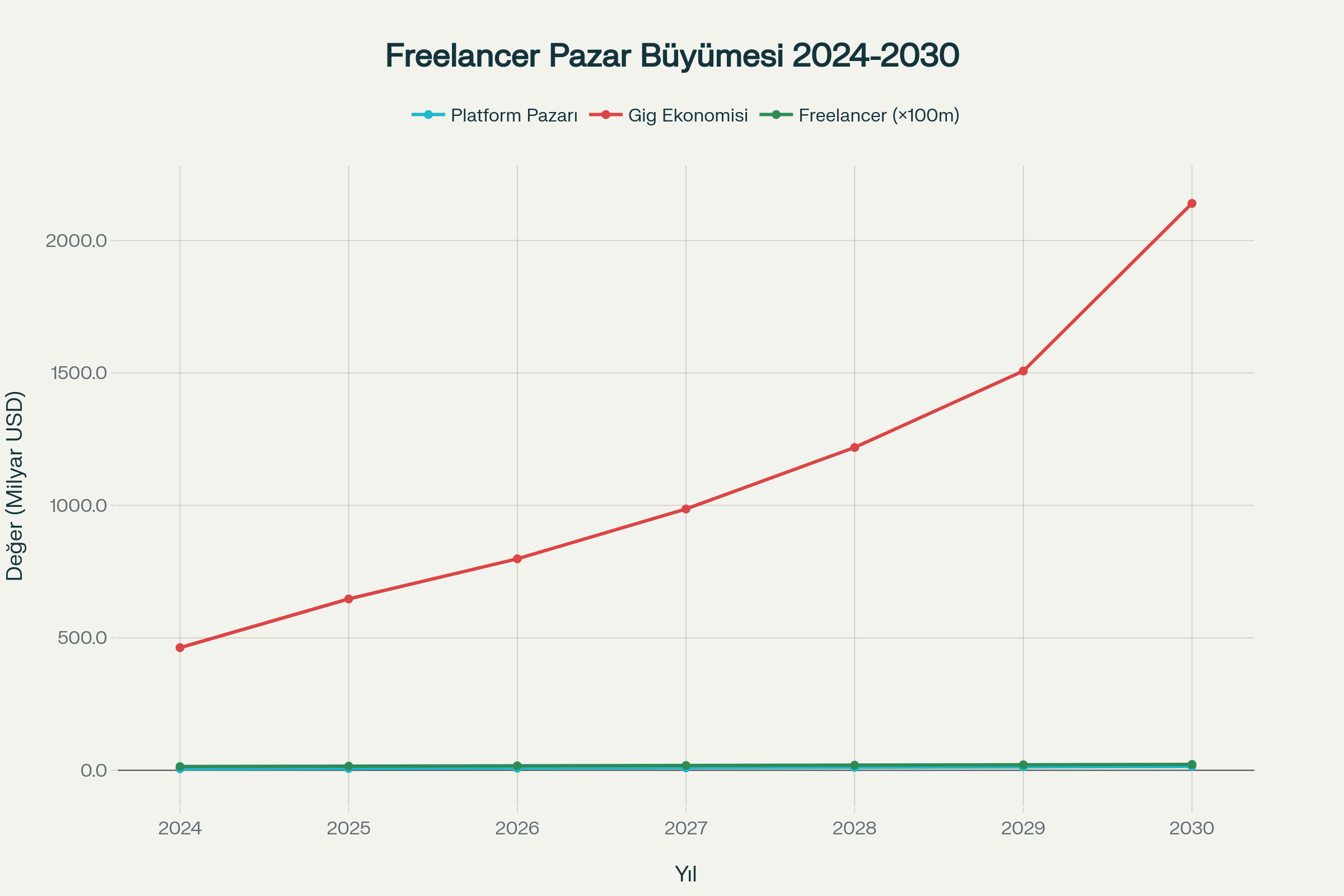
Freelancer Market Growth Projections (2024-2030)
The global freelancer population is expected to reach 1.57 billion in 2025, representing about 47% of the global workforce. Projections suggest that by 2027, 50.9% of the U.S. workforce will consist of freelancers.
Regional Growth Dynamics
The Asia-Pacific region is showing the fastest growth in the freelancer economy. India alone has added 24 million new freelancers, while China leads the market with 1.5 billion transactions. In Latin America, the freelancer participation rate is expected to rise from 3% pre-pandemic to 30% in 2025.
Platforms and Monetization Models
Platform Comparison and Commission Structures
-
Upwork: 15% commission, ideal for long-term professional projects.
-
Fiverr: 20% commission, suitable for quick, fixed-price gigs.
-
Toptal: No commission, premium clients only, accepts the top 3% of freelancers.
Subscription and Recurring Revenue Models
One of 2025’s key trends is the shift toward subscription-based payments. Similar to Netflix, this model ensures stable, recurring income for freelancers and predictable budgets for clients—especially effective in areas like social media management, SEO, and content production.
Global Payments and Cryptocurrency
Crypto payments are becoming increasingly common among freelancers due to fast transaction times, low fees, and ease of cross-border transfers. Stablecoins reduce volatility, offering freelancers a secure alternative payment method.
The Impact of AI on the Freelance Industry
Positive Effects and Opportunities
AI tools significantly boost freelancer productivity. According to Fiverr research, AI-using freelancers save 8 hours per week and earn 40% more. These tools are revolutionizing fields such as content creation, design, and project management.
New AI-focused freelance roles are emerging, including prompt engineering, AI model training, chatbot development, and AI ethics consulting, all commanding high rates.
Challenges and Shifting Skill Demands
However, AI also poses challenges. Routine tasks are declining — translation jobs dropped 20–30%, and “About Us” page writing decreased by 50%. Tasks requiring creativity, critical thinking, and interpersonal communication are becoming more valuable.
The State of Freelancing in Turkey
Current Statistics
In Turkey, the median annual income for freelancers is around $39,909. The country’s freelance workforce rate is 28.6%, one of the highest globally. With IT salaries averaging 28,000 TRY/month (~$800), many Turkish freelancers are shifting toward international markets.
Access to European Markets
Platforms like UPTION provide European IBAN accounts, enabling Turkish freelancers to receive cross-border payments easily—a major advantage amid currency fluctuations.
Competitive Positioning
Turkish freelancers are particularly strong in software development, graphic design, and digital marketing, making them attractive to clients in Europe and the Middle East due to their skill level and time-zone advantage.
Emerging Trends and Opportunities
Digital Nomadism and Visa Policies
By 2025, over 60 countries offer digital nomad visas, including Croatia, Estonia, and Portugal, with minimum monthly income requirements between €2,500–€3,500. These visas provide opportunities for tax optimization and improved quality of life for freelancers.
Education and Skill Development
The online education market is expected to reach $5 billion. Freelance teaching in fields such as AI, programming, and digital marketing offers high earning potential. Successful instructors on Udemy, Coursera, and Skillshare can earn over $10,000/month.
Mental Health and Burnout Management
-
41% of freelancers report stress, anxiety, or mental health issues affecting their work.
-
Isolation, financial instability, and poor work-life balance are common problems.
-
Different time zones and the “always online” culture contribute to burnout risks.
Solutions:
Setting clear boundaries, taking regular breaks, and maintaining social connections are essential. Co-working spaces, online freelancer communities, and therapy services serve as valuable support systems.
Platform and Strategy Recommendations
For Beginners
Platforms like Fiverr and Freelancer.com are ideal for building portfolios and gaining early experience thanks to low entry barriers and accessible projects.
For Advanced Professionals
Upwork and Toptal should be preferred for long-term, high-value contracts, particularly Toptal, which connects freelancers with premium clients.
Future Strategies
Post-2025, freelancers should focus on niche specialization, AI integration, and subscription-based business models. Building a personal brand and developing direct client relationships are key to reducing platform dependency.
Conclusion and Key Takeaways
The freelance industry in 2025 is undergoing a massive transformation shaped by technology, AI, and evolving work models. With 1.57 billion freelancers and a $2.14 trillion global market, the future of freelancing is bright.
Key success strategies include:
-
Learning and integrating AI tools
-
Specializing in niche areas
-
Building subscription-based revenue streams
-
Embracing continuous learning
For Turkish freelancers, the combination of remote work opportunities, foreign currency advantages, and access to global markets presents unique prospects.
Maintaining mental well-being and sustainable work habits is essential for long-term success. Work-life balance, financial planning, and network building remain the cornerstones of a thriving freelance career.
By 2025 and beyond, freelancing is evolving from an alternative form of employment into a mainstream career model. For those eager to be part of this great transformation, now is the time to prepare.